
Why is Kannauj known for attar?
🌸 1. Historical Background
Kannauj has a very ancient history. This city was a prominent capital during the time of Harshavardhan. During the Mughal era, the perfume (attar) industry received special patronage. It is believed that Nur Jahan loved the fragrance of roses, and during her time, the art of extracting perfume from roses was promoted.
Since then, Kannauj became a major center for attar production.
🌺 2. Traditional “Deg-Bhapka” Method
Even today, attar in Kannauj is made using the traditional deg-bhapka method:
-
Large copper vessels (deg) are filled with flowers, herbs, or spices.
-
The fragrance is extracted through steam.
-
This steam is then mixed into sandalwood oil, resulting in pure and natural attar.
This technique is hundreds of years old and is still used without modern machinery.
🌹 3. Prominent Attars
Many types of attars are made in Kannauj, such as:
-
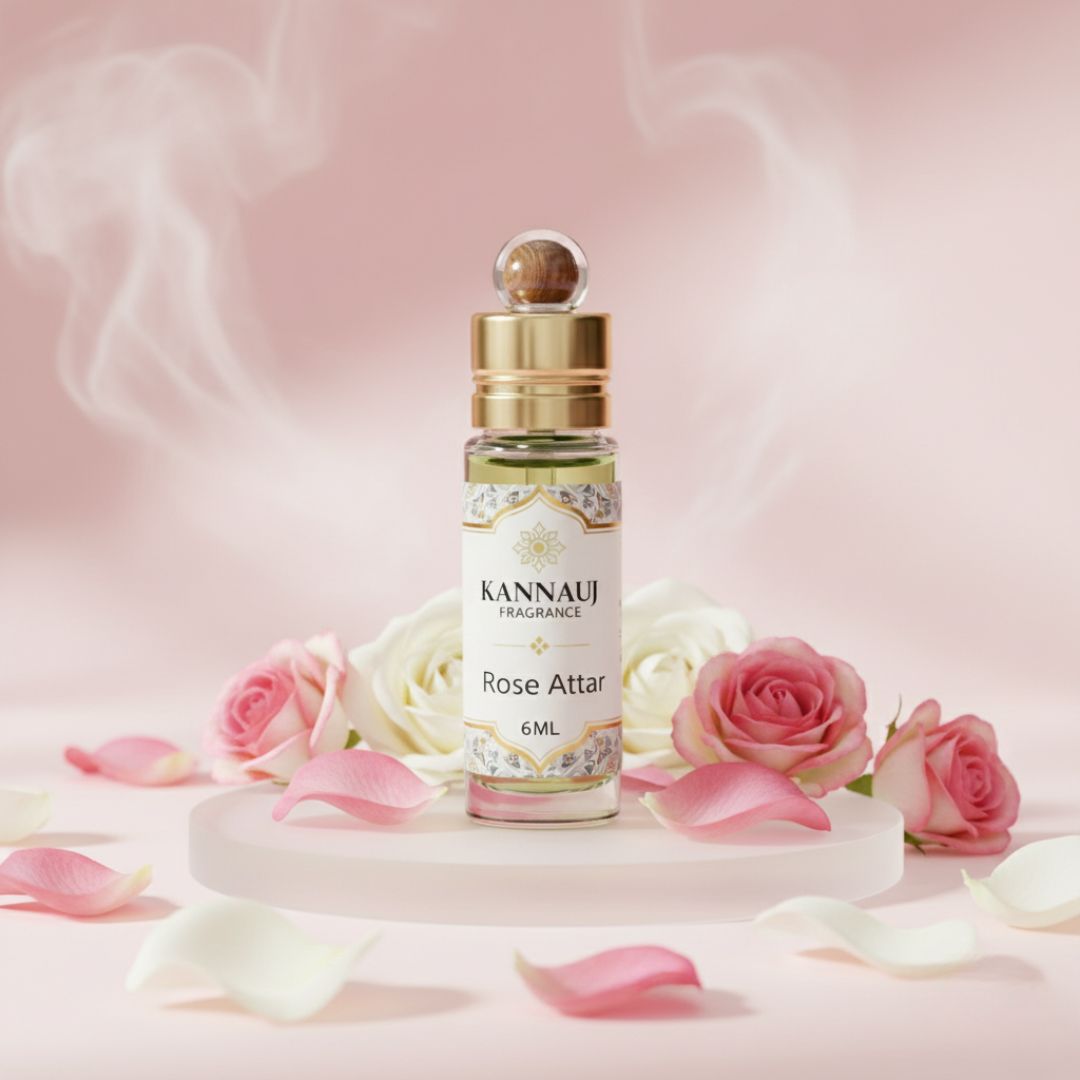
Rose attar
-
Kewra attar
-
Vetiver (Khas) attar
-
Jasmine attar
-
Mitti attar (fragrance of rain-soaked earth)
“Mitti attar” is a special identity of Kannauj, capturing the earthy scent of the first rain.
🌍 4. International Recognition
Kannauj’s attar is exported not only across India but also to the Middle East and Europe.
Attars from here are considered special because they are traditional and chemical-free.
The perfume industry of Kannauj has also received a Geographical Indication (GI Tag), securing its unique identity.
🏭 5. Local Economy
A large portion of Kannauj’s population is connected to the perfume industry.
Hundreds of small factories and family businesses have been carrying forward this work for generations.
✨ Conclusion
Kannauj is called the “City of Attar” because:
-
It has a centuries-old tradition of perfume making,
-
The traditional deg-bhapka technique is still alive,
-
And its fragrances have earned a distinct identity both in India and abroad.
🌸 Step-by-Step Process of Making Attar in Kannauj
🔹 Step 1: Selection of Raw Materials
First, natural fragrant materials are chosen:
-
Rose petals
-
Jasmine flowers
-
Kewra
-
Vetiver (Khas)
-
Or soil (for making Mitti attar)
Flowers are usually picked early in the morning to keep their fragrance fresh and strong.
🔹 Step 2: Filling the Deg (Copper Vessel)
The large copper vessel is called a deg.
Water and the selected flowers or other materials are placed inside.
The mouth of the deg is tightly sealed with cloth and clay to prevent the steam from escaping.
🔹 Step 3: Heating on the Furnace
The deg is placed on a furnace fueled by wood or coal.
Slow heating causes the water to boil, releasing fragrant steam.
The temperature is carefully controlled—this is where the true craftsmanship lies.
🔹 Step 4: Collecting Fragrance in the Bhapka (Condenser)
The steam from the deg passes through a bamboo pipe into another vessel called the bhapka.
This bhapka already contains sandalwood oil.
The steam cools down, turns into liquid, and the fragrance mixes into the sandalwood oil.
🔹 Step 5: Cooling Process
The bhapka is placed in a tub surrounded by cold water.
This helps the steam cool quickly and turn into liquid.
The process continues for several hours.
🔹 Step 6: Repeating (Recharging Process)
To achieve a stronger fragrance, the process is repeated multiple times.
Fresh flowers are added each time, but the same sandalwood oil is reused so the fragrance becomes richer and more concentrated.
🔹 Step 7: Maturation
The prepared attar is stored in leather or glass bottles for several months.
Over time, its fragrance becomes smoother, richer, and more stable.